

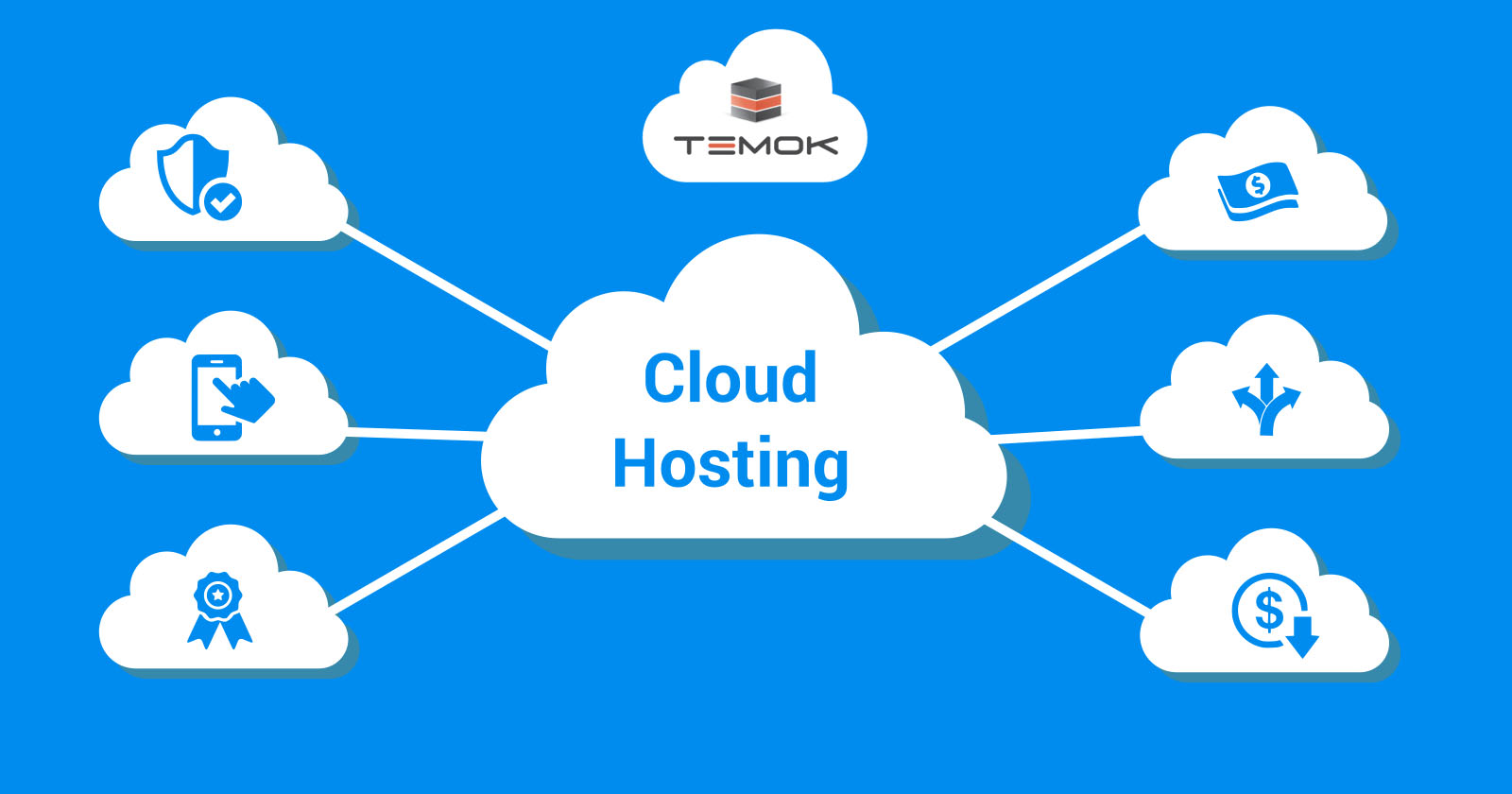
Cloud Hosting – What is it and How Does it Work?

Cloud Hosting is a powerful and popular way to host your website or application. It is an increasingly popular hosting solution, as it offers numerous benefits such as scalability, cost-effectiveness, and reliability. In this blog post, we will explore what Cloud Hosting is and how it works. We’ll look at the various types of Cloud Hosting and discuss the advantages and disadvantages of using it. Finally, we’ll provide tips and tricks to help you get the most out of your Cloud Hosting service.
What is cloud hosting?
Cloud hosting is a type of web hosting service that allows businesses to store their data and applications on a remote server instead of a physical machine. It is powered by multiple servers in a virtualized environment, which means your website can access the same resources as a server in a traditional hosting environment, but without the same hardware cost. Cloud hosting provides businesses with the flexibility to scale their resources as needed and access multiple services, such as databases, email, and storage solutions, from one platform.
The cloud hosting model also offers advantages such as improved uptime, increased reliability, and greater scalability, all of which are essential for modern businesses. With cloud hosting, businesses can reduce their IT costs significantly since they don’t need to purchase expensive hardware to manage their data. Cloud hosting is often seen as the more reliable, secure, and efficient option compared to traditional hosting options.
For businesses that require complex solutions or want to expand quickly, cloud hosting is an ideal choice. Businesses can benefit from using cloud hosting solutions for data-driven applications, enterprise-level solutions, and websites with large amounts of traffic.
The benefits of cloud hosting
Cloud hosting is a great option for businesses looking to increase their server capacity without investing in expensive hardware. Cloud hosting offers many advantages, including scalability, flexibility, cost savings, and improved performance.
Scalability: Cloud hosting allows you to quickly add or remove server resources to meet the demands of your business. With cloud hosting, you can scale up or down with ease, ensuring you’re always providing your customers with the best service possible.
Flexibility: With cloud hosting, you’re not limited to physical servers located in one location. You can access your servers from anywhere in the world, giving you the flexibility to move to different areas or even set up multiple locations for redundancy.
Cost savings: By hosting your data in the cloud, you save money on server hardware and other costs associated with traditional hosting solutions. Since you only pay for the resources you use, cloud hosting can be a much more cost-effective solution than traditional hosting plans.
Improved performance: Cloud hosting offers better performance compared to traditional hosting options. With cloud hosting, your website will experience less downtime, faster loading speeds, and improved security. This helps keep your customers happy and increases customer loyalty.
The drawbacks of cloud hosting
Cloud hosting can be more expensive than traditional hosting plans because you are paying for virtualized resources. Depending on the service provider and how much computing power is needed, your bill could easily get out of hand.
Another issue with cloud hosting is its lack of control. You do not have direct access to the server, so you cannot make any changes or updates to it. This can make managing and troubleshooting complicated, as you have to rely on the service provider for support.
Finally, many cloud hosting providers are known for unreliable uptimes. If a server crashes or goes offline, it can take a while to recover, which could mean a few hours or even days of downtime. This could be a major problem for websites and businesses that depend on their website being online. Furthermore, if there is an issue with your server’s security, you would need to trust the service provider to fix it. Additionally, if the cloud hosting provider were to experience data loss, then this would also be an issue.
In general, when considering cloud hosting, you need to look at both pros and cons and decide if it is right for your specific needs. If you require higher levels of customization, then traditional hosting might be a better option since you will have full control over the server. However, if you are looking for scalability and reliable performance, then cloud hosting may just be the perfect solution for you.
How does cloud hosting work?
Cloud hosting is a type of web hosting that uses a virtualized environment to store and serve files. In this system, multiple servers are linked together to form a “cloud” of resources that can be shared among multiple users. This setup allows for scalability and availability, as resources can be drawn from other servers in the cloud if one server becomes overloaded or if its resources become unavailable.
Cloud hosting works by abstracting physical servers into multiple virtualized instances. Each instance functions independently and can be modified to the user’s needs. Each instance is usually dedicated to a single customer and runs its operating system. The cloud then manages the load between instances, making sure that no single instance is overloaded.
One major benefit of cloud hosting is that it provides an environment for greater scalability than traditional hosting. As users demand more storage or processing power, additional cloud instances can be added without having to shut down the server or move data. This also makes cloud hosting more reliable, as any hardware or software failure can be compensated for by moving data to other available servers.
Cloud hosting also provides enhanced security since each customer’s data is stored in a separate virtual environment. All customer data is kept in its own space and is isolated from other customers on the same server. Furthermore, cloud hosting providers are well aware of their customer’s needs for high security and often implement multiple levels of security measures to ensure the protection of customer data.
Finally, cloud hosting is cost-efficient as users only pay for the services they use. Since there are no upfront costs associated with building a physical server, cloud hosting eliminates the need for large capital investments in hardware and associated maintenance costs.
In conclusion, cloud hosting is an efficient, cost-effective way to host websites and applications. By utilizing multiple virtualized instances and allowing for scalability and availability, cloud hosting ensures businesses have the resources they need without having to invest in expensive hardware. Cloud hosting also provides enhanced security measures that protect customer data, making it a reliable choice for businesses of all sizes.